

 英语
 西班牙语
An Elevated Canopy Dog Bed raises the sleeping surface off the ground and adds shade overhead, and both changes target the same problem: dogs overheat faster than people. A dog cools itself mainly by panting and through its paws, so hot ground and direct sun make the difference between a comfortable afternoon outdoors and a dog that cannot settle. As owners spend more time with their dogs on patios, in gardens and at campsites, beds built for heat and sun have become a regular product in pet supply catalogs.
Ground Heat Is the Problem to Solve
Surfaces absorb sunlight and hold the heat. Concrete, decking and dark paving can feel far hotter than the air above them, and a dog lying on that surface takes the heat straight into its body. A plain cushion on hot ground only slows the process a little.
An Elevated Canopy Dog Bed puts a gap between the dog and the surface. Air flows through the gap, carrying warmth away from underneath, and the dog rests on a fabric panel that stays close to the air temperature instead of the ground temperature. That one change is the main reason elevated beds suit hot climates and summer use.
Mesh Fabric Moves Air
Breathable and quick-drying
A typical Elevated Canopy Dog Bed stretches a mesh fabric across a frame. The mesh lets air pass through and gives no place for moisture to settle, so rain, spilled water and damp fur dry quickly. A bed that holds water can smell within a day or two, so open mesh is a practical choice outdoors.
Fabric tension
The fabric must be pulled tight across the frame, because a loose panel sags under the dog and touches the ground. Sturdy stitching along the edges keeps the fabric from tearing when the dog jumps on or turns around.
What the Canopy Adds
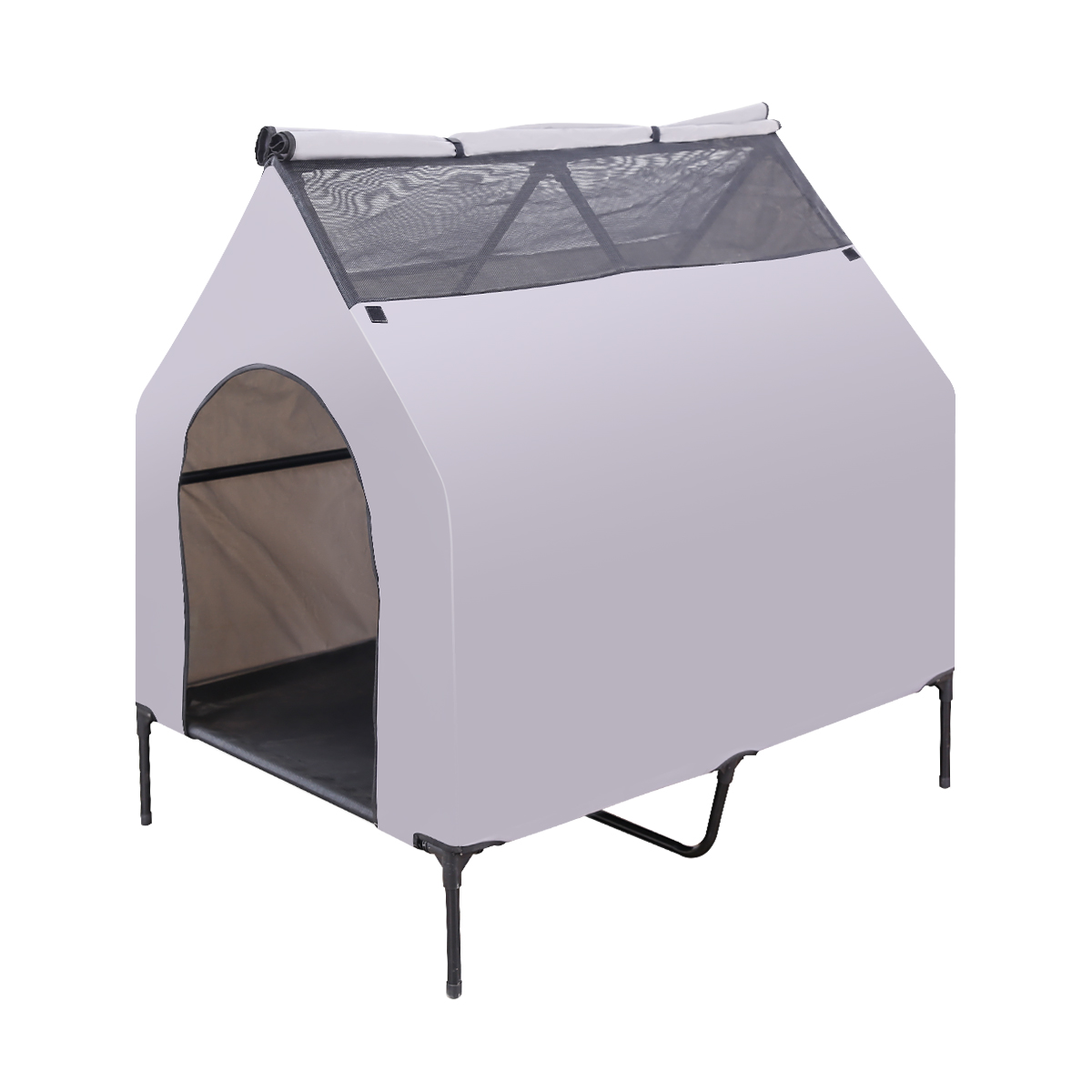
The canopy on an Elevated Canopy Dog Bed blocks direct sunlight and cuts down glare, and UV-resistant fabric reduces the sun exposure that thin-coated and light-skinned dogs are sensitive to. A removable canopy gives the owner a choice: in summer the bed carries its shade cover, and in mild weather the cover comes off so the bed works as an open cot.
Canopies behave like small sails, so wind needs consideration. A bed placed in a gusty spot should sit on level ground, with the canopy fastened firmly to the frame, and a few heavy objects or stakes can hold it in place on exposed terrain. The shade also moves with the sun, so owners benefit from placing the bed with the canopy facing the strongest afternoon sun.
Frame Materials and Weight Rating
The frame of an Elevated Canopy Dog Bed is usually steel or aluminum. Steel is strong and stable, though heavier, and it needs a coating to resist rust. Aluminum is light and does not rust, which suits owners who carry the bed to a campsite or the beach, but a thin aluminum tube can bend under heavy loads.
The weight rating should be well above the dog's weight, since dogs jump onto beds, not step. A bed that carries a large dog calmly when it sits may flex when the same dog leaps up. Feet with non-slip caps keep the frame from sliding on tile or decking and protect floors from scratches.
Choosing the Right Size
An Elevated Canopy Dog Bed should be long enough for the dog to stretch out fully, with a little spare room beyond its nose and tail. A bed that is too small makes the dog curl up, which reduces the cooling effect of the mesh. Height matters too. Large, athletic dogs step up without trouble, but small and older dogs find a tall frame hard to climb, so a low-profile model is a better fit for them.
Where the Bed Gets Used
Backyards and patios are the usual homes for these beds, with the canopy facing the afternoon sun. Campers take them to give the dog a clean place to rest away from damp ground and insects. A raised dog bed with canopy also works on a boat deck or beside a picnic table. At the beach, where sand holds heat and a dog has little shade, anElevated Canopy Dog Bed gives it somewhere cool to lie down, and an elevated dog cot with shade keeps that place standing even when the wind rises along the shore.