

 英语
英语 西班牙语
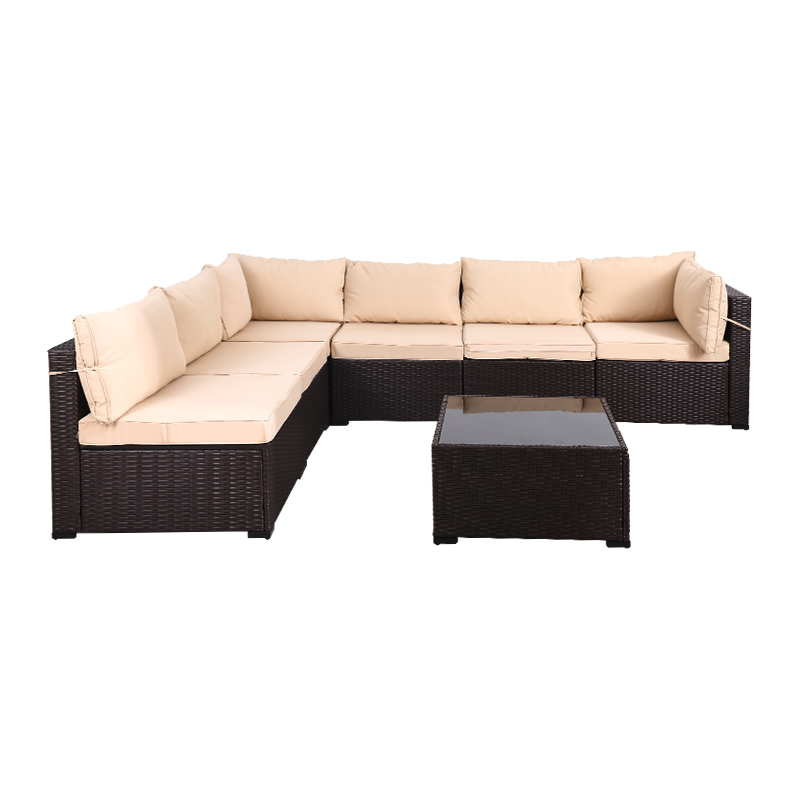
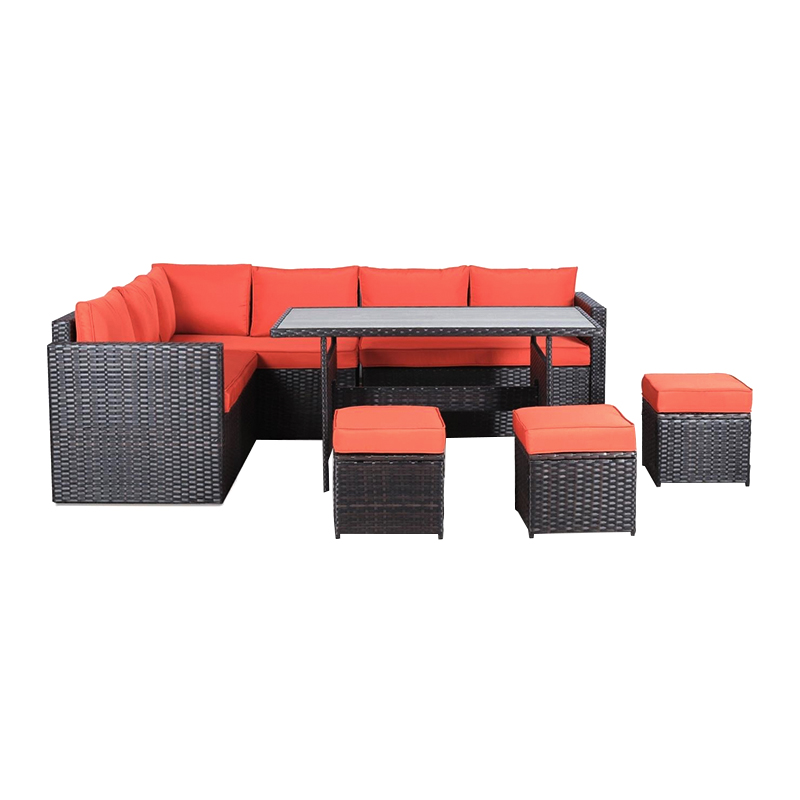
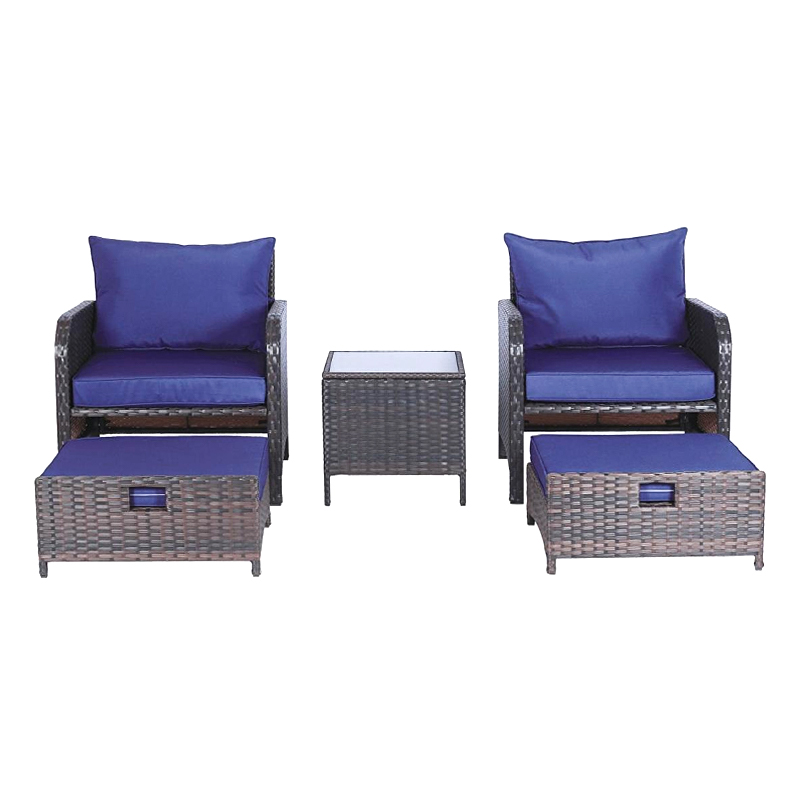
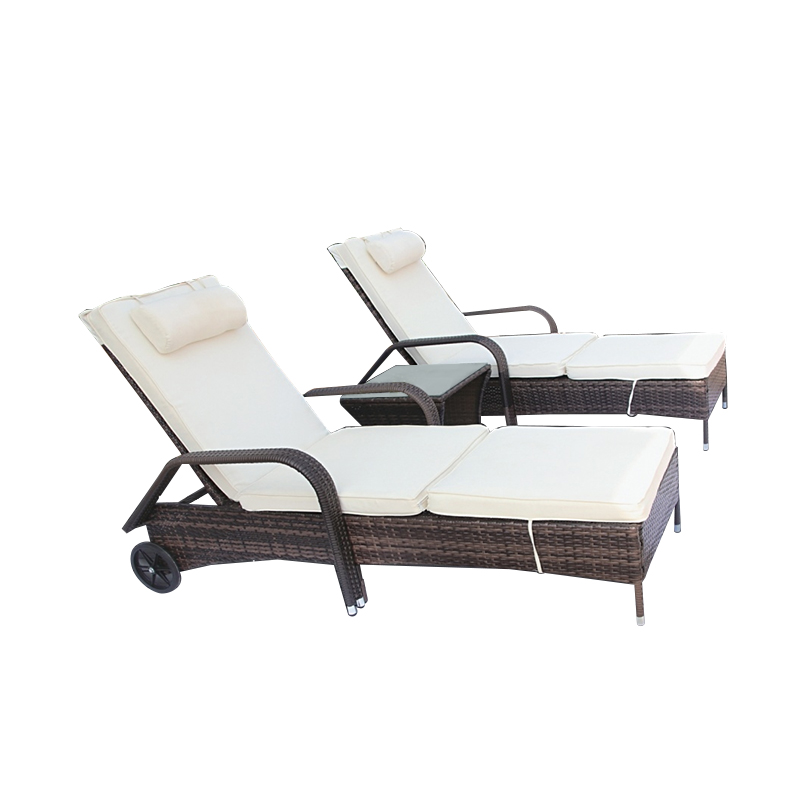
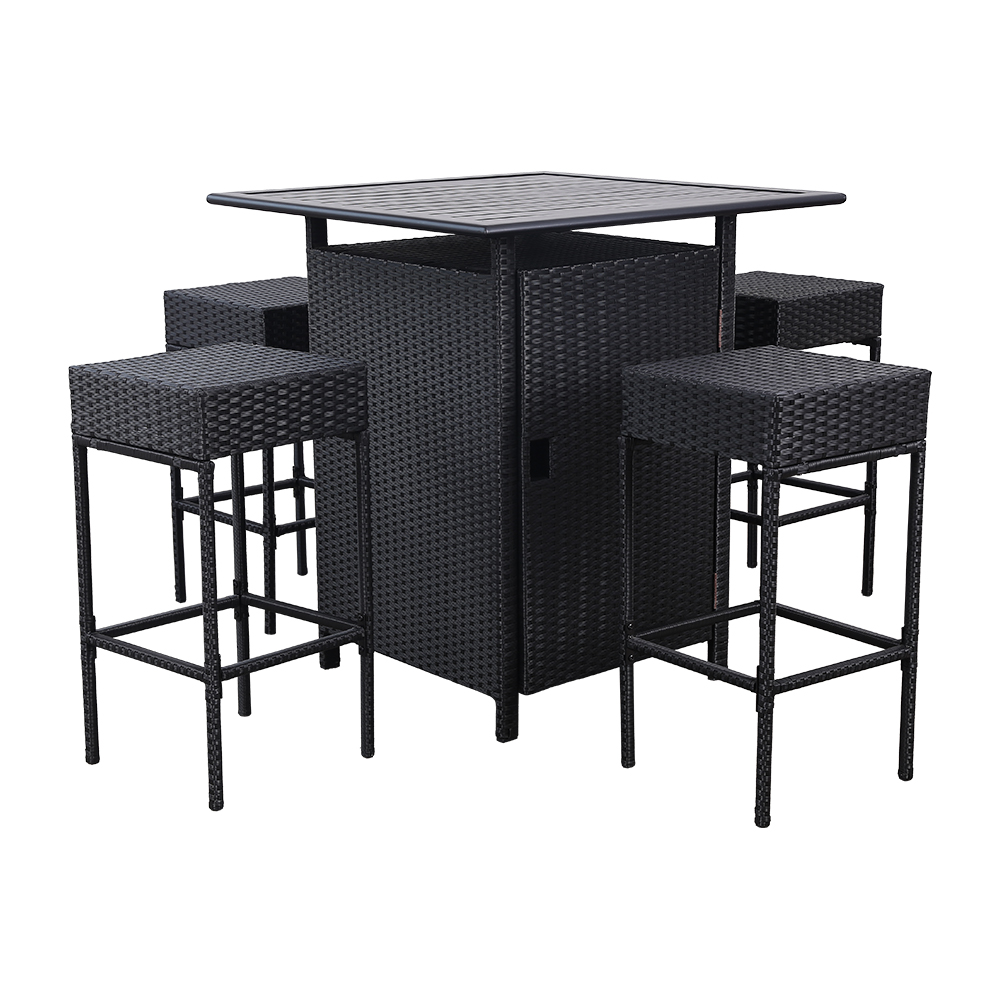
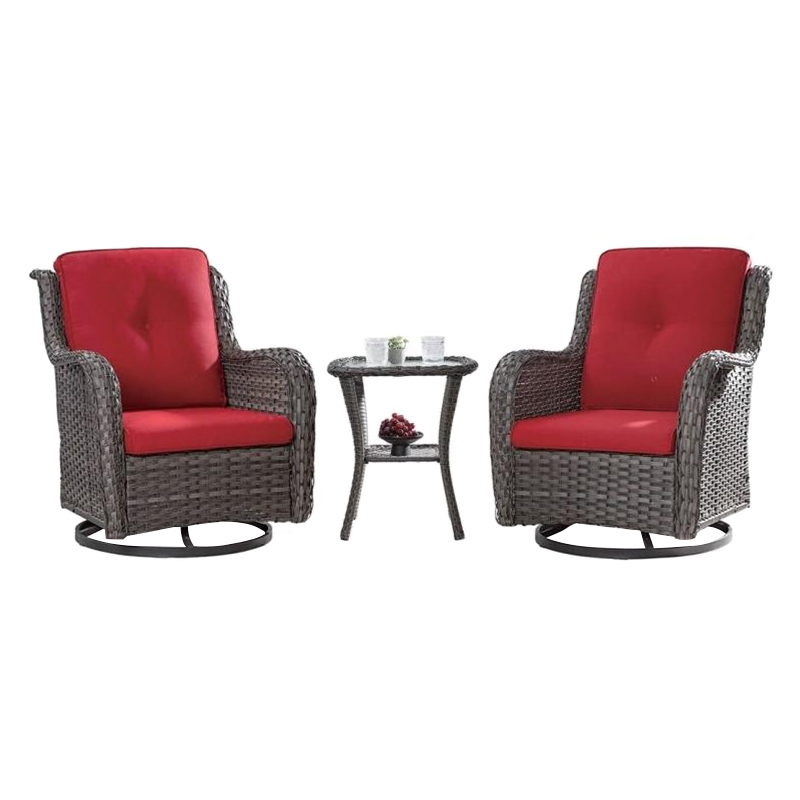
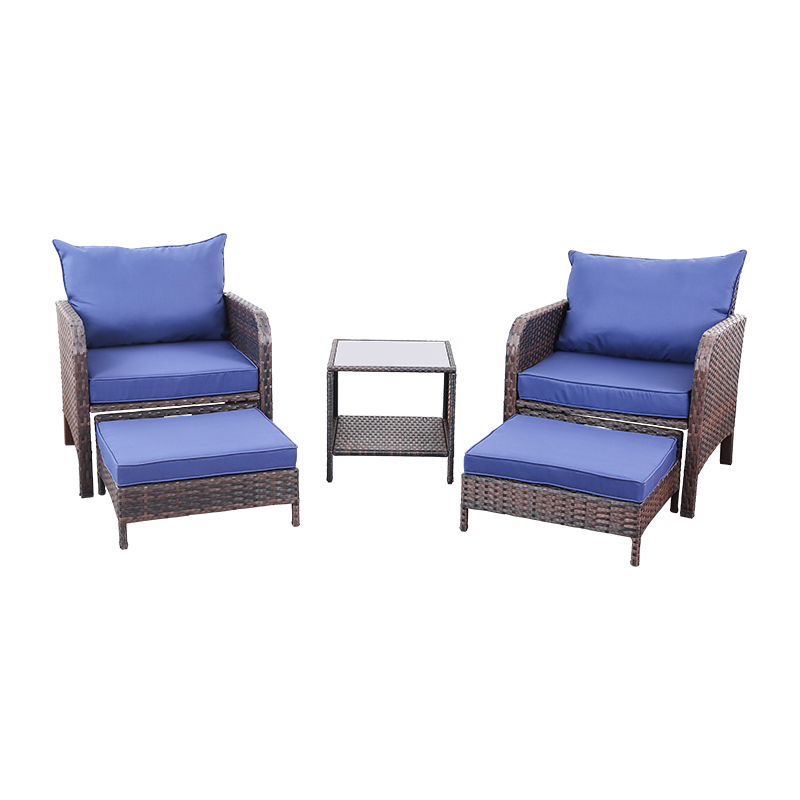
西班牙语A rattan weave that looks tight and even on a factory sample can loosen or fray after a single outdoor season if the material and weaving tension weren't calibrated for sustained UV and moisture exposure. Manufacturing a Five-Piece Rattan Set that holds its structure and appearance across years of outdoor use depends on synthetic material selection and weaving process details that don't show up in a general product description.
Synthetic Rattan Material Grade Determines UV Resistance
The synthetic rattan strand used in a Five-Piece Rattan Set is typically extruded from polyethylene, and the specific resin formulation used affects how well the material resists UV degradation over repeated sun exposure. Lower-grade PE rattan can fade, become brittle, or crack within a year or two of outdoor use, while a PE rattan furniture line built from UV-stabilized resin holds color and flexibility considerably longer. Buyers comparing supplier quotes should ask specifically about UV stabilizer content in the resin formulation rather than accepting a general "weather-resistant" claim without supporting material specification.
Weaving Tension Consistency Affects Long-Term Structural Integrity
Manufacturing a Five-Piece Rattan Set at production scale requires consistent tension control during the weaving process, since strands woven too loosely sag under seating weight while strands woven too tightly can crack under thermal expansion during temperature swings. Manufacturing teams building Five-Piece Rattan Set frames for export durability test finished panels under simulated load before approving a batch for shipment, checking that the weave holds its shape rather than stretching permanently out of position after repeated use. This testing step matters more for outdoor furniture than indoor equivalents, since temperature and humidity cycling outdoors puts more stress on woven joints than a stable indoor environment does.
Comparing Weaving Approaches and Their Manufacturing Demands
|
Weaving Factor |
Machine-Assisted Weave |
Hand-Finished Weave |
|
Consistency across units |
Higher, tighter tolerance |
Variable, depends on technician |
|
Production speed |
Faster for bulk orders |
Slower, more labor-intensive |
|
Typical application |
Standard catalog SKUs |
Premium or custom-pattern orders |
|
Cost position |
Lower per unit at volume |
Higher, reflects labor input |
Buyers placing high-volume bulk orders for a Five-Piece Rattan Set typically default to machine-assisted weaving for cost and consistency, while buyers targeting premium retail positioning sometimes specifically request hand-finished detailing on visible panels.
Frame Welding Precision Supports the Woven Structure
The aluminum or steel frame underneath a weather-resistant rattan set needs welded joints strong enough to support the woven panel under repeated seating load without flexing at connection points. Manufacturing teams inspect weld quality at each joint before the frame moves to the weaving stage, since a weak weld discovered after weaving is complete requires costly rework that a pre-weave inspection avoids entirely. Buyers sourcing at volume should ask suppliers whether weld inspection happens before or after weaving, since this sequencing affects how efficiently defects get caught in the production process.
Container Loading Reflects Component Design Choices
A Five-Piece Rattan Set with a compact packed footprint around 240 sets per 40-foot high-cube container reflects deliberate design choices in how frame components disassemble and nest for shipping, rather than being purely a function of total product size. Buyers comparing quotes should factor packed carton efficiency into total landed cost calculations, since a design that nests and packs more densely can offset a slightly higher unit price through meaningfully lower per-unit freight cost across a full container order.
Certification and Customization for Bulk Buyers
Buyers placing bulk orders for an outdoor rattan sofa set program should request material safety and durability testing documentation covering the specific resin batch and weave pattern under quote, since formulation and weaving process can shift subtly between production runs even under the same product name. Manufacturers running dedicated tooling across multiple rattan color and weave-pattern options can typically accommodate customization requests without requiring new frame development, provided the requested configuration stays within the dimensional range the existing frame mold supports.