

 英语
 西班牙语
A closed shelter blocks sun and rain well, but it can trap warm air around a resting pet just as easily, which is the problem a Ventilated Pet Tent is built to solve. A Ventilated Pet Tent is built to avoid that trade-off, using mesh panels and an open frame so air keeps moving through the shelter even while the roof still blocks direct sun. The difference between a tent that shades and one that also ventilates comes down to how much of the structure is solid fabric and how much is open mesh.
Where the mesh goes and why
Placement of the mesh panels on a Ventilated Pet Tent matters more than the total mesh area. A tent with mesh only on one side lets air in from that direction but does little to move it through, since the air has nowhere to exit on the far side. Cross-ventilation needs an entry point and an exit point working together, not just an opening somewhere in the fabric. A tent with mesh on two or more sides, positioned opposite each other, lets warm air pass through the shelter rather than settling inside it, which keeps the space inside noticeably cooler than a single-mesh design on a still afternoon.
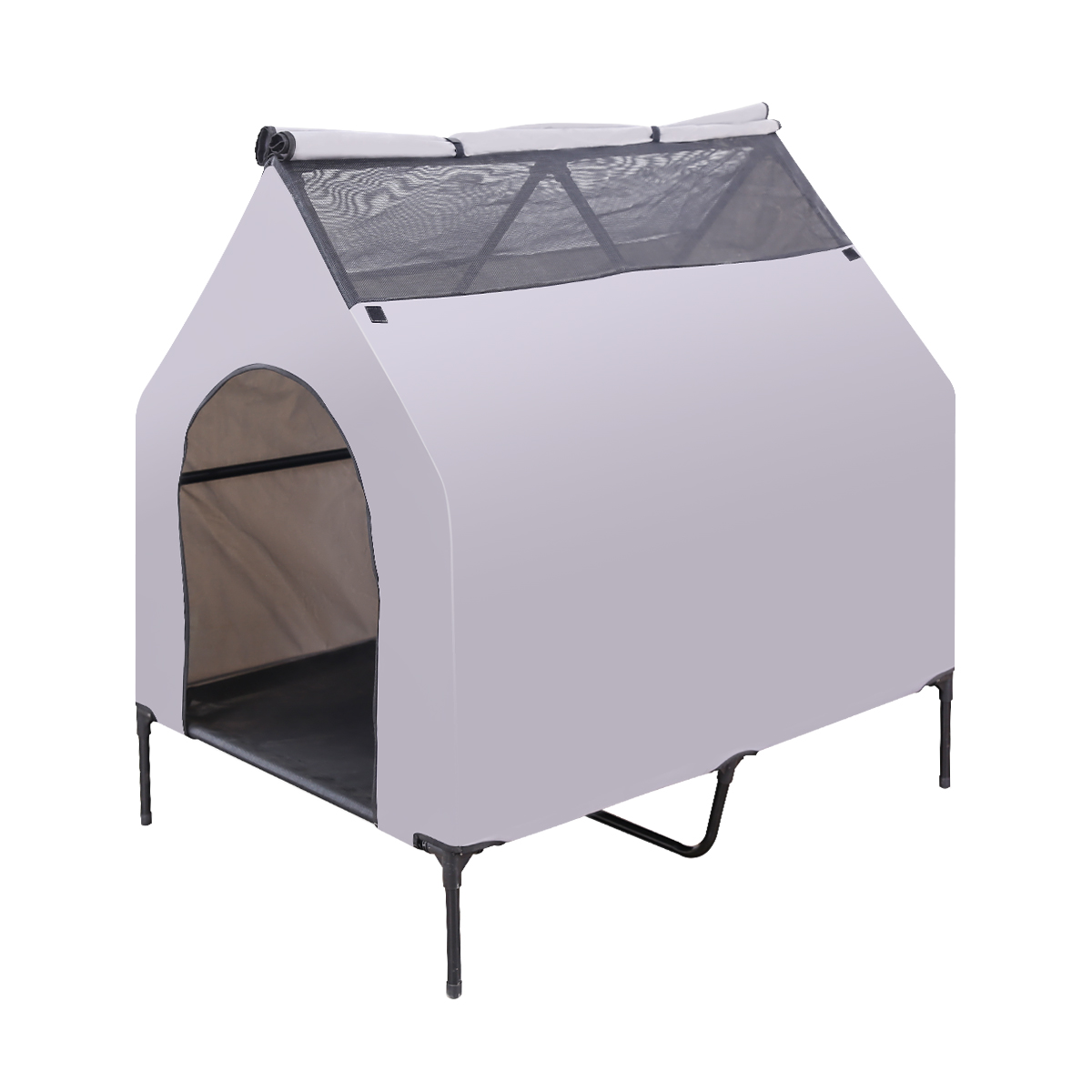
Panel height also plays a role. Mesh set low, near where the pet lies, moves air directly across the resting area rather than only through the upper part of the tent, and this is the detail easiest to miss when comparing tents by their photos rather than their measurements. A Ventilated Pet Tent with mesh at the level where the pet actually rests does more for comfort than one with high mesh panels and a low solid base, even if the two designs use a similar amount of mesh fabric overall.
Balancing shade and airflow
Full mesh walls would move the greatest amount of air, but they would also let in direct sun through the sides during parts of the day, which works against the tent's purpose as shelter. A pet tent intended for outdoor use during the day usually keeps a solid roof and a solid section of wall facing the sun's typical path, while opening the remaining sides to mesh. That combination blocks the sun where it would otherwise land directly on the pet while still allowing cross-ventilation through the shaded sides.
Fabric choice affects this balance too. A roof made from a tightly woven, UV-resistant material blocks more heat from passing through than a thin fabric would, so less heat builds up inside even with the sides open. A Ventilated Pet Tent that pairs a heat-blocking roof with open mesh sides gives more of the airflow benefit without giving up the shade the roof is there to provide.
Portability without losing structure
Many pet tent designs fold down for travel, and the frame has to hold its shape once set up despite folding into a compact form for storage. A collapsible pole frame, with the mesh and fabric panels attached along the poles, sets up in a few steps and holds a stable shape once the poles lock into position, and a fitted pole sleeve keeps the panel tension even across every side of the shelter. A Ventilated Pet Tent built this way suits both a backyard and a camping trip, since the same setup works in either place.
Weight and pack size follow closely from the frame material chosen. Lightweight poles keep the folded tent easy to carry, which matters for a pet owner moving the tent between the car, the campsite and the yard across a single trip. A pet tent that folds into a size close to its own base footprint takes up less space in a car boot than one that folds into a long, awkward bundle.
Fitting a ventilated tent into a pet product line
Buyers developing a pet shelter range can offer a Ventilated Pet Tent alongside a solid-roof pet house, giving customers a choice between full weather protection and a lighter, airier option for warm-climate use. Listing the mesh placement and the roof material together, rather than just an overall size, helps buyers compare how much airflow a given model actually provides.
Frame size, mesh density and cover colour can be adjusted for private label projects aimed at different climates. A Ventilated Pet Tent built for a hot, sunny market may call for denser shade fabric on the roof, while one aimed at a milder climate can use a lighter fabric throughout. A Ventilated Pet Tent that keeps the mesh placement and the roof material working together, rather than treating ventilation as a single feature added on one side, gives a pet a shaded spot that also stays comfortable through a warm afternoon.