

 英语
英语 西班牙语
西班牙语Many outdoor beds do not fail all at once.
The fabric usually loosens first, the frame begins making slight movement sounds, or the folding joints stop opening smoothly after repeated trips. By the time visible damage appears, the structure has often been wearing down quietly for months.
That is especially true for a camp bed lounger because the product experiences constant movement instead of staying in one fixed place like indoor furniture.
Camping equipment gets folded, dragged, stacked into vehicles, exposed to moisture, and left under sunlight for long periods. Small maintenance habits make a surprisingly large difference in how long the bed actually survives.
Moisture Is Usually More Damaging Than Weight
A lot of users focus heavily on load capacity when buying a camp bed lounger, but outdoor moisture often shortens product lifespan much faster than body weight itself.
After camping trips, many folding beds are stored immediately while fabric and joints still contain humidity from grass, rain, or morning condensation. Over time, trapped moisture gradually affects both metal parts and stitching areas.
The damage usually begins slowly around:
- folding hinges
- fabric corners
- screw connections
- coated frame surfaces
- stitching sections
Actually, even corrosion-resistant coatings become less stable if moisture remains trapped repeatedly inside moving joints.
Allowing the lounger to dry completely before storage often matters more than people expect.
Sunlight Quietly Changes Fabric Strength
Outdoor fabrics age differently from indoor furniture materials.
A camp bed lounger left under direct sunlight continuously during summer gradually loses fabric flexibility even if the surface still looks normal initially. UV exposure slowly weakens woven fibers, especially around high-tension areas where body pressure concentrates during use.
This becomes more noticeable in lightweight portable loungers because the fabric usually remains under tighter tension than traditional camping beds.
Over time, lower-quality materials begin showing:
- fading
- edge fraying
- stitching stress
- surface stiffening
- reduced elasticity
Interestingly, fabric aging often appears earlier on the upper surface than underneath because heat and UV exposure combine together throughout outdoor use.
Folding Too Aggressively Damages The Frame
Many people fold a camp bed lounger quickly without paying attention to frame alignment.
Inside folding furniture, the moving joints are designed to follow a specific closing direction. Once the frame twists unevenly during folding, pressure around the hinges increases sharply.
This does not usually break the chair immediately.
Instead, the frame gradually develops small alignment problems after repeated forced folding. Eventually the lounger may wobble slightly or stop locking into position smoothly.
Factories often test folding cycles thousands of times during development, but rough handling still shortens hinge lifespan much faster in real outdoor environments.
Sand And Dust Create Hidden Wear
Camping equipment often collects fine sand, dirt, and dust particles without users noticing immediately.
Inside a camp bed lounger, those particles gradually enter hinge sections and moving joints during outdoor use. Once friction increases inside the folding system, the metal surfaces wear faster during opening and closing.
Beach camping environments are especially difficult because fine sand behaves almost like grinding material inside the moving structure.
That is why outdoor furniture manufacturers often recommend wiping joints clean before long-term storage instead of only cleaning the visible fabric surface.
Actually, many folding problems begin from accumulated dirt rather than weak metal strength.
Storage Position Changes Long-Term Stability
A camp bed lounger stored incorrectly for months sometimes develops frame stress even without active use.
If heavy items press continuously against the folded structure, the frame geometry slowly shifts over time. Lightweight aluminum structures are particularly sensitive to uneven storage pressure.
Fabric tension also changes during long-term compression.
For that reason, experienced outdoor users usually avoid placing heavy camping gear directly on top of folded loungers inside storage rooms or vehicle compartments.
Keeping the lounger relatively flat and dry helps preserve both frame alignment and fabric shape.
Cleaning Products Can Damage Outdoor Coatings
Some users clean a camp bed lounger with strong chemical sprays designed for household furniture or automotive surfaces.
Outdoor coatings often react differently.
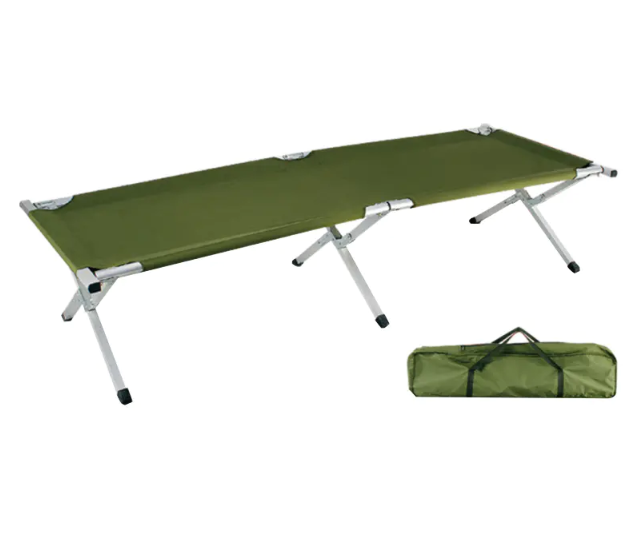
Aggressive cleaners may gradually weaken protective coating layers around metal frames, especially near joints where friction already creates microscopic wear. Certain detergents also harden synthetic outdoor fabrics after repeated cleaning cycles.
Most outdoor furniture actually lasts longer with relatively simple cleaning methods.
Warm water, mild soap, and proper drying usually protect the material better than strong chemical treatment.
Movement Stress Is Impossible To Avoid Completely
Unlike indoor beds, a camp bed lounger experiences constant transport vibration during real use.
It gets loaded into cars, unfolded on uneven ground, moved between campsites, and exposed to changing temperatures repeatedly. Some mechanical wear is simply unavoidable over time.
However, products usually last much longer when users reduce unnecessary stress around the moving areas instead of focusing only on visible fabric care.
Actually, most outdoor loungers become unusable because the folding structure loses stability long before the sleeping surface itself completely fails.
Well-Maintained Outdoor Furniture Usually Feels Smooth
People rarely inspect camping furniture carefully while using it.
They simply notice whether the camp bed lounger still opens smoothly, remains stable on uneven ground, and feels reliable after repeated outdoor trips.
The products that last longer are usually not the ones treated delicately every day.
They are the ones kept dry before storage, folded correctly, cleaned before dirt accumulates inside the joints, and protected from unnecessary long-term outdoor exposure between trips.