

 英语
英语 西班牙语
西班牙语A lot of pet products look comfortable in product photos. The real test usually happens outside — under direct sunlight, on wet grass, beside camping tents, or after several weeks of repeated outdoor use.
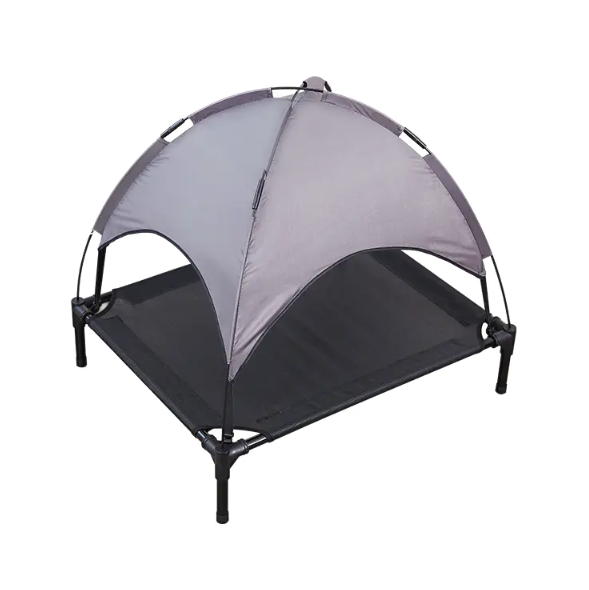
That is where the design of a raised dog bed with sun shade starts making more sense.
Unlike ordinary pet mats placed directly on the ground, elevated structures change airflow underneath the dog while the overhead canopy reduces direct heat exposure during outdoor rest. The combination became increasingly common in camping products, garden pet furniture, and portable outdoor pet equipment.
Actually, many owners first buy this type of bed for convenience, then later realize temperature control is the bigger advantage.
Ground Heat Affects Dogs More Than People Notice
During summer, concrete, wooden decks, and artificial grass absorb heat continuously throughout the day.
A dog lying directly on those surfaces often experiences more body heat accumulation than owners expect. A raised dog bed with sun shade changes this by creating an airflow gap underneath the resting area.
That suspended structure helps reduce heat transfer from the ground upward.
The difference becomes more obvious in:
- patios
- camping areas
- balconies
- outdoor cafés
- backyard spaces
Especially for long-haired breeds, airflow underneath the body matters more than soft cushioning during hot weather.
This is one reason elevated pet beds became common in outdoor environments instead of thick foam cushions.
The Sun Shade Does More Than Block Light
A lot of buyers think the canopy on a raised dog bed with sun shade mainly exists for visual appearance.
In reality, the shade structure changes the temperature around the resting area itself.
Direct sunlight heats fabric surfaces surprisingly quickly. Once the bed material absorbs enough heat, the resting surface becomes uncomfortable even if outdoor air temperature still feels moderate.
The overhead shade helps slow that heat buildup.
Factories producing outdoor pet furniture usually pay attention to canopy angle and fabric density because poor shade coverage often creates uneven temperature zones across the bed surface.
Dogs naturally move toward cooler sections once part of the fabric becomes overheated.
Mesh Fabric Became More Common Outdoors
Indoor pet cushions often focus on softness first. Outdoor products follow different priorities.
A raised dog bed with sun shade usually uses breathable mesh instead of thick padded materials because outdoor moisture and heat create completely different usage conditions.
Mesh structures help with:
- airflow circulation
- faster drying
- reduced odor buildup
- sand and dust release
- easier cleaning
Actually, many outdoor pet beds fail earlier from trapped moisture and fabric odor than from frame damage itself.
Breathable materials reduce that problem considerably.
Portable Frames Need To Balance Weight And Stability
One challenge in manufacturing a raised dog bed with sun shade is balancing portability with structural stability.
Outdoor users usually want lightweight frames for travel and camping, but lighter tubing changes how the bed behaves once larger dogs climb onto it repeatedly.
This becomes especially important around the joint areas.
Portable pet beds experience constant movement during setup and folding. Over time, weak frame connections loosen gradually, especially if the bed is transported frequently between outdoor locations.
Factories therefore spend a surprising amount of development time testing frame pressure distribution instead of focusing only on appearance.
A pet bed that shakes slightly during use immediately feels lower quality even if the fabric itself remains strong.
Outdoor Fabrics Age Differently
Indoor pet furniture rarely deals with continuous UV exposure.
A raised dog bed with sun shade spends much more time exposed to sunlight, humidity, and outdoor temperature changes. Over time, lower-grade fabrics usually begin fading or stiffening around high-stress areas first.
The canopy often shows aging before the main sleeping surface because it receives direct sunlight constantly.
Manufacturers usually test outdoor fabrics for:
- UV resistance
- tear strength
- stitching durability
- moisture behavior
- color stability
Actually, stitching failure around the canopy edges is one of the more common outdoor durability problems after extended use.
Dogs Prefer Stable Surfaces More Than Soft Ones
Interestingly, many dogs adjust to elevated beds very quickly once the structure feels stable.
A raised dog bed with sun shade does not necessarily feel softer than ground cushions, but the suspended support creates a cooler and drier resting environment outdoors.
For older dogs especially, keeping the body away from damp surfaces sometimes matters more than thick padding.
This becomes noticeable during camping or rainy weather where ground moisture remains trapped long after the surface appears dry.
Actually, outdoor pet comfort often depends more on temperature and dryness than on softness alone.
Outdoor Pet Furniture Became More Travel-Oriented
Years ago, pet furniture was mostly designed for indoor spaces.
Now, products like the raised dog bed with sun shade increasingly target travel, camping, beach use, and outdoor leisure environments. Pet owners move more frequently with animals than before, and portable outdoor equipment followed that lifestyle change naturally.
Because of that, modern outdoor pet beds now focus heavily on:
- folding speed
- lightweight carrying
- quick cleaning
- ventilation
- compact storage
The product category gradually shifted from “pet furniture” toward something closer to outdoor travel equipment.
For many owners, convenience during movement became just as important as comfort during rest.